Sentiment
How favourably a chat speaks about your brand, scored 0–100 and averaged over the chats that name it — what the scale means and who scores it.
Sentiment is how favourably a chat speaks about the brand, scored 0–100.
| Score | Reads as |
|---|---|
| 0 | Hostile |
| 50 | A neutral mention — named, not praised or criticised |
| 100 | A strong endorsement |
The figure shown is the average over the chats that named the brand. Chats that did not name it are not in the denominator: a chat that ignored you is a visibility problem, not a sentiment of zero.
Who scores it
A separate, cheaper model reads the answer and rates every brand it named, against the three anchors above. One call per answer covers the whole field at once — so the brands in one chat are scored by one reader with one piece of context, which is what makes them comparable with each other.
It is the only figure in Recomma that is a judgement rather than a count. Visibility, share of voice and position are arithmetic over text that either does or does not contain a name; sentiment is an opinion about tone, produced by a model, and worth reading with that in mind.
An unscored chat shows a dash
Not a 50. This distinction is deliberate and worth understanding, because the two look the same on a chart and mean opposite things:
- 50 is a real reading — the chat named you neutrally.
- — means the chat has not been scored.
Averaging an unscored chat in as 50 would drag every real score toward the middle and make a well-liked brand look ordinary.
How to read it
Read the chats, not just the number. Sentiment is the metric where the aggregate is least useful on its own. A 71 average can be a hundred bland mentions or fifty warm ones and fifty hostile ones, and the second is an emergency. Sentiment is available per prompt on the Prompts table, which is where you find the questions dragging it down.
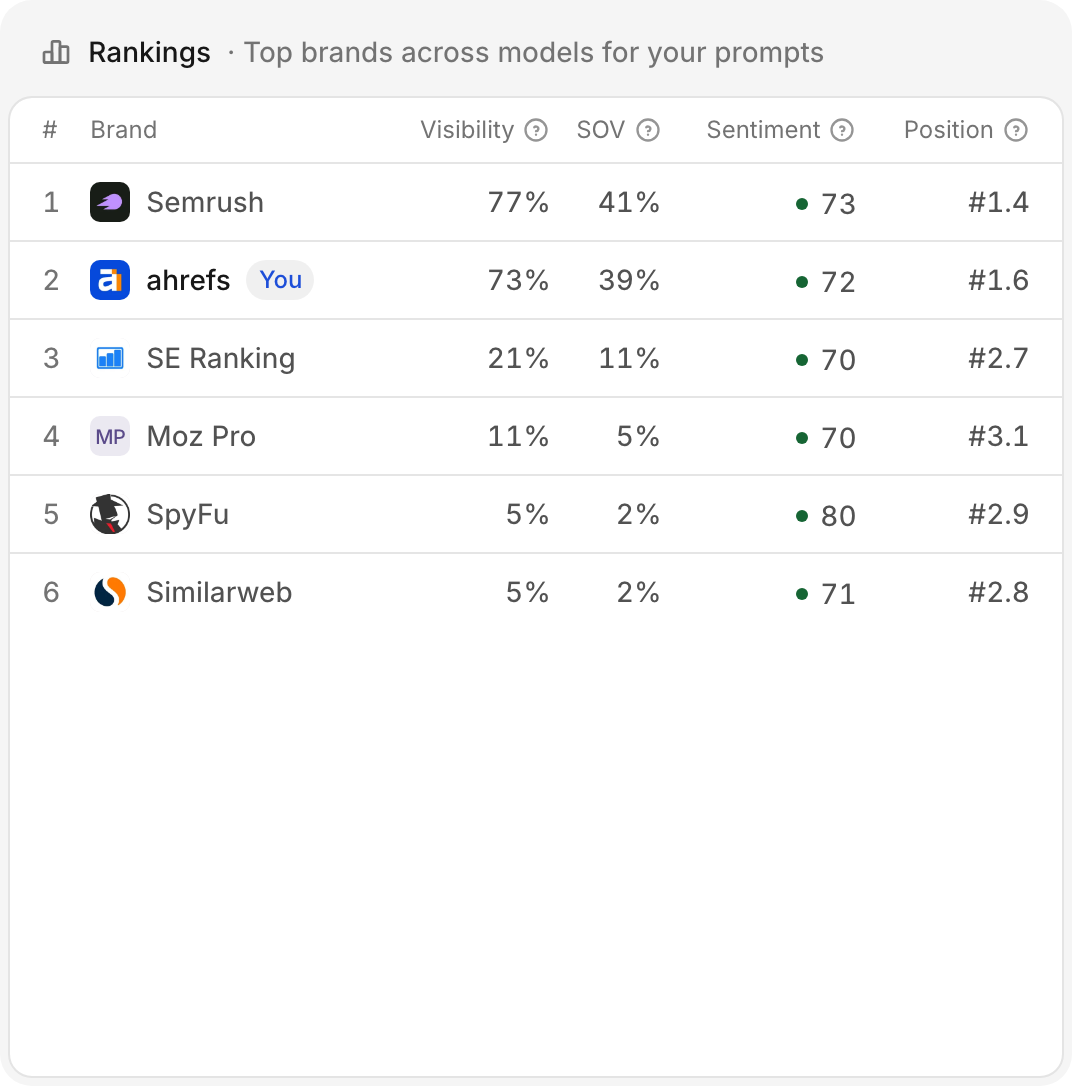
Compare against the field, not against 100. Models are not effusive. A category where the leader averages 76 is not a category where 76 is a bad score. The Rankings table puts your score next to everyone else’s for exactly this reason.
Where a low score usually comes from
Rarely from a model disliking you. Usually from a chat repeating a criticism it read somewhere — a comparison page, a forum thread, a review with a caveat in it. Sources is where you find which page it was reading.
Related
Share of voice
Your share of all the brand mentions once every tracked brand is counted — how it differs from visibility, and why repeating a name does not help.
Position
How early in a chat your brand is named among the tracked brands, averaged over the chats that name you — the one figure that rewards being first.